

What if the right wig isn’t the one that looks most like your old hairstyle, but the one that feels comfortable in your life now? Choosing a wig for hair loss can bring up questions about coverage, fit, materials, and whether a new style will feel like you. It’s understandable to feel unsure when all of these choices seem important.
You don’t have to decide everything at once. Start with the coverage you want and the comfort and care your day-to-day routine calls for. Then compare fit, construction, and style. This guide offers practical ways to narrow your options while keeping what feels familiar and comfortable to you in view.
Creative Wigs & Hair Replacement offers in-person consultations in Utah, along with designer wigs, hairpieces, styling, and maintenance. As a family-owned business serving Utah for over 60 years, the team helps clients explore their preferences and find options suited to their needs. There’s room to take your time and consider what feels right for you.
Key Takeaways
- Start choosing a wig for hair loss by identifying the coverage, comfort, and everyday feel you want.
- Use the wig maker’s measuring instructions and size guidance. A wig should feel secure, not painfully tight.
- Compare full wigs and hairpieces, then consider how construction affects the feel and styling options.
- Choose a color, length, and texture that suit your preferences and the care your routine allows.
- An in-person consultation at Creative Wigs can help you explore fit, coverage, color, and comfort in Salt Lake City, South Jordan, Orem, St. George, and surrounding areas.
Choosing a Wig for Hair Loss Starts With Your Needs
Hair loss can affect more than appearance. It may change how comfortable you feel in familiar settings, how you see yourself, or how much effort it takes to get ready. You might be curious about wigs, unsure about wearing one, or ready to explore. All of those reactions are understandable, and you don’t have to decide right away.
A hair-loss wig is a personal coverage option chosen around your needs, preferences, and daily life. There isn’t one style or construction that suits everyone. As you begin choosing a wig for hair loss, consider what you want covered, what feels comfortable, and how you hope a wig will fit into your routine. For general background on the history and types of wigs, you can also explore how people have worn them for different reasons over time.
Start with the coverage you want
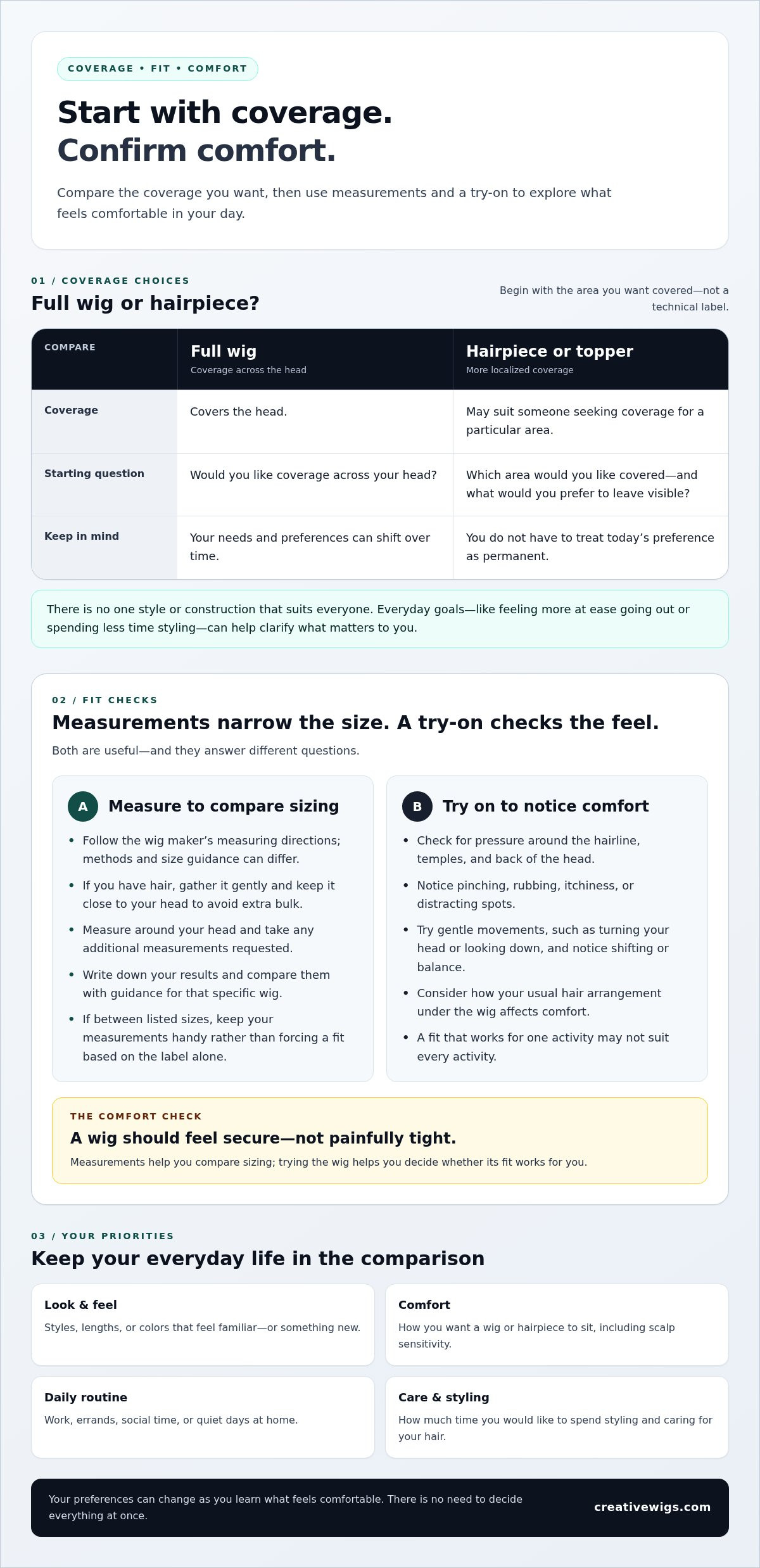
First, consider whether you want full coverage or a hairpiece for a particular area. A full wig covers the head, while a hairpiece or topper may suit someone seeking partial coverage. Your needs may shift over time, so you don’t have to treat today’s preference as permanent.
Describe your hopes in everyday terms. Do you want to feel more at ease going out, spend less time styling, or have an option for certain occasions? Note which areas you’d like covered and what you’d prefer to leave visible. These details are a more useful starting point than technical terms when you’re still working out what matters most.
Make room for your feelings and preferences
There’s no single emotional response to considering a wig. You might feel hopeful and hesitant at the same time. You may want a familiar look or feel ready to try a different length, shape, or color. Exploring options doesn’t commit you to wearing any particular one.
Before comparing choices, jot down what you enjoy and what your day asks of you. For example:
- Styles, lengths, or colors that feel like you, whether familiar or new
- Comfort preferences, such as how you want a wig or hairpiece to sit
- Regular activities, including work, errands, social time, or quiet days at home
- How much time you’d like to spend styling and caring for your hair
These notes aren’t rules. They help keep your priorities in view as you explore. Start with one preference and adjust as you learn what feels comfortable. There’s no need to rush; a useful first step is understanding what you want support with right now.
Wig Fit and Scalp Comfort: Find a Feel-Good Starting Point
A wig needs to feel comfortable enough for your day as well as look the way you want. Fit is personal: existing hair, a sensitive scalp, and changes in coverage can all affect what feels right. Use measurements to narrow down sizing, then pay attention to how the wig feels when you wear it. Accurate measurements and a comfortable fit are separate but equally useful checks. Measurements help you compare size guidance; trying the wig helps you decide whether its fit works for you.
How to prepare for a wig measurement
Follow the wig maker’s measuring directions, since methods and size guidance can differ. If you have hair, gather it gently and keep it close to your head so it doesn’t create extra bulk under the tape. Avoid pulling or pressing hard, especially if your scalp feels tender.
Use the maker’s instructions to measure around your head and take any additional measurements they request. Write down the results, then compare them with the size guidance for the specific wig. Don’t assume a size label means exactly the same thing across every wig. If your measurements fall between listed sizes, keep them handy as you compare options rather than forcing a fit based on the label alone.
What to notice when trying on a wig
Once you try on a wig, pause before deciding. Notice whether it feels secure without pinching, pressing, or distracting you. Check for pressure around the hairline, temples, and back of the head. If you have a sensitive scalp, even mild rubbing or itchiness may matter, so take time to notice how the cap feels. A wig should not feel painfully tight.
Try a few gentle movements, such as turning your head or looking down, and notice whether the wig shifts or feels balanced. This helps you observe the fit as you move, though one fit may not suit every activity. If you wear your hair under the wig, consider how your usual arrangement affects comfort. Your preferred fit may also change if your coverage needs or scalp sensitivity change.
- Notice pressure, rubbing, itchiness, or spots that feel distracting.
- Check whether the wig feels balanced rather than pulling in one direction.
- Pay attention to slipping during gentle movement, without expecting one fit to suit every activity.
Choosing a wig for hair loss doesn’t mean you have to work through every fit question on your own. A personalized, in-person consultation gives you space to discuss measurements, scalp comfort, and how you plan to wear your wig. In Utah, Creative Wigs & Hair Replacement offers in-person wig consultation support. Take your time; noticing what works is useful progress, even if you’re still deciding.
Wig Types and Construction: Match Coverage to Your Routine
Once you have a sense of your coverage goals, compare the broad types of pieces available. The labels can sound technical, but begin with a simple question: what do you want covered, and how would you like the piece to fit into your day? Full wigs, hairpieces, and different cap constructions suit different preferences. None is automatically the best choice for everyone.
Full wig or hairpiece: which coverage feels right?
A full wig offers coverage across the head. Hairpieces and toppers are options for more localized coverage. Think about the area you want covered and the overall feel you’re seeking, rather than assuming one category will suit your situation. Your preference may also change, so it’s okay to explore without treating your first choice as final.
Daily life can help make the decision clearer. Consider whether you want coverage across your head or a piece focused on a particular area. If you’re unsure, describe your coverage goal in plain language and compare options from there. The aim is to find a piece that fits your needs, not to choose a category just because it sounds familiar.
Construction and material choices to consider
Construction terms describe how parts of a wig are made. A lace front, for example, refers to a lace panel at the front, while a monofilament cap has a mesh area. These features can affect appearance, feel, and styling options, but the label alone can’t promise a particular result. Consider how the construction feels to you and whether its styling possibilities suit your preferences.
Material is another choice to weigh. Synthetic and human hair wigs can involve different styling and care considerations, so think about the routine you’re comfortable maintaining. Read the care guidance for the specific wig and consider how much time you want to spend on upkeep and styling. A choice that fits your habits may feel easier to wear consistently.
- Start with coverage: full coverage or a more localized hairpiece.
- Compare construction features by how they feel and what styling options they offer.
- Choose a material with care and styling needs that fit your routine.
Keep the comparison manageable. You don’t need to decide on coverage, construction, and material all at once. Choosing a wig for hair loss can be a step-by-step process: narrow down the coverage you want, then consider which features and care routine feel workable. If you’d like more detail on material differences, the separate synthetic wig vs human hair comparison explores that choice more closely.
Choose Wig Color, Style, and Maintenance for Everyday Life
Once coverage and construction feel clearer, consider how you want your wig to look and what caring for it might involve. A style can feel familiar, offer a welcome change, or land somewhere in between. You don’t have to recreate your previous hairstyle exactly. Start with what feels comfortable and appealing to you now.
Choose a look that feels like you
Think about the colors and hairstyles you’ve enjoyed, as well as what you might like to try. You may prefer a shade close to your familiar look or feel ready to explore a different color. Neither choice is more appropriate. A photo of a style you like can be a useful reference, but let it guide the conversation rather than dictate the final choice. Your comfort matters more than copying an image perfectly.
Length, texture, and shape can also affect how a wig fits into ordinary life. Consider how the style feels during your usual activities and how much attention you want to give it. Think about where you spend your time, from getting ready for work to relaxing at home. Ask yourself:
- Would I feel more at ease with a familiar shape or a noticeable change?
- Do I enjoy styling my hair, or would I rather keep daily preparation simple?
- How might the length and texture feel during my usual activities?
These questions help you picture the wig as part of your real routine, not just as a style on display. If you’re exploring designer options, a Utah designer-wig guide can offer another way to consider different looks as you narrow your preferences.
Think through care before choosing
Care is part of choosing a wig for hair loss, so consider how much time you want to spend styling and maintaining it. Needs vary by material and by the manufacturer’s care instructions. Read those directions before settling on a choice, and think about whether the routine suits your schedule. A style you love should also feel manageable in everyday life.
Separate regular styling from occasional care. Consider the time you’d like to spend getting ready, along with the cleaning and maintenance involved over time. Creative Wigs & Hair Replacement offers wig cleaning, maintenance, and styling for clients in Utah. That support can be part of your decision if you’d like help keeping a piece fresh and maintaining its appearance.
Bring your color ideas, reference photos, and care questions to an in-person consultation. Creative Wigs’ team can help you explore designer wigs and personal preferences together. Explore wig styling and care support as you consider a look that feels right for your routine.
Get Personal Help Choosing a Hair-Loss Wig in Utah
Comparing coverage, fit, color, comfort, and care can feel like a lot to hold in mind at once. An in-person consultation brings those questions together so you can talk through what matters to you and explore wigs and hairpieces. You don’t need to arrive with every detail decided. A few notes about your preferences can give the conversation a helpful starting point.
Creative Wigs & Hair Replacement is a family-owned Utah business that has served clients for over 60 years. The team offers personalized consultations for people in Salt Lake City, South Jordan, Orem, St. George, and surrounding areas. Bring your questions and preferences, then explore options at a pace that feels comfortable.
What to bring to an in-person wig consultation
A little preparation can help you express what you’re looking for, but you don’t need a perfect checklist. Bring any measurements you’ve taken, along with a few photos of styles, colors, or shapes you like. Photos are useful references, not rules. You can also note what feels comfortable and how you typically spend your day.
- Your measurements and any questions about fit or comfort
- Reference photos showing styles or colors you’re drawn to
- A short list of coverage preferences and everyday activities
- Thoughts about styling time and the kind of care routine you prefer
It can help to explain what you hope a wig or hairpiece will make easier, whether that’s getting ready, feeling more comfortable in certain settings, or finding a familiar look. Share any concerns, too. Take time to consider what you see and feel during the consultation. Exploring possibilities is useful even if you leave with more to think about.
How personalized guidance can make the choice easier
When choosing a wig for hair loss, seeing options in person can help you consider several details together. The Creative Wigs team can help you explore designer wigs and hairpieces in relation to your coverage goals, fit, color preferences, and routine. The business carries designer brands such as Jon Renau, Belle Tress, Raquel Welch, Gabor, Rene of Paris, and Tony of Beverly.
You can talk through what feels familiar, what you’re curious about, and what practical care would fit your days. A conversation can make a complicated choice feel more manageable, one preference at a time. Explore personalized wig help at Creative Wigs and take the next step when you’re ready.
Take Your Next Step at Your Own Pace
You don’t need to make every decision today. As you continue choosing a wig for hair loss, let your preferences become clearer through thoughtful questions and, if it feels right, trying options in person. Notice what feels comfortable to wear, what fits your routine, and what you’d like to explore further. Changing your mind as you learn more is part of finding a personal choice.
If you’re ready for support, Creative Wigs can help you explore possibilities in a personalized setting. Bring the questions you still have, even if they’re not fully formed. A conversation can be a helpful next step, without needing to have everything figured out beforehand. Explore personalized wig help at Creative Wigs and arrange an in-person consultation.
Frequently Asked Questions
Is it better to choose a wig before hair loss begins?
Exploring options before anticipated hair loss can give you time to compare without feeling rushed. You might note the colors and styles you wear now, or take photos to help you remember what feels familiar. There’s no required timeline, and you don’t have to buy or decide early. If hair loss may be connected to treatment, talk with your healthcare team about timing and any care-related questions.
Can I wear a wig if I still have some of my own hair?
Yes, you can explore a wig or hairpiece while you still have some hair. Your own hair can affect how a piece sits, so consider how you’ll wear it underneath and whether that arrangement feels comfortable. If you’re near Salt Lake City, South Jordan, Orem, St. George, or surrounding Utah communities, an in-person consultation can help you consider coverage and fit with your existing hair in mind.
Are wigs the only option for people experiencing hair loss?
No. You might choose a scarf, hat, hairpiece, or no covering at all. Your choice can also vary by setting: perhaps you prefer a hat outdoors and nothing at home, or a hairpiece for a particular occasion. There’s no obligation to cover hair loss. If it’s related to a health condition or treatment, your healthcare team is the right resource for medical questions; a wig consultation can focus on appearance and fit.
Can insurance help pay for a wig after cancer treatment?
Possibly, but coverage depends on your individual plan and circumstances. Read your policy documents and ask your insurer about applicable benefits, required paperwork, and any limits before making assumptions about reimbursement. If your healthcare professional has discussed a wig prescription, ask whether they can provide documentation for your insurer. Keep copies of relevant paperwork and receipts, and remember that coverage decisions are made according to your plan.
How many wigs should someone with hair loss have?
There’s no set number you need. One wig may suit your current routine, while another person may value having a second option for a different look or situation. Start by considering how often you expect to wear a piece and how you’d manage care if it needs attention. Choosing a wig for hair loss is personal, so add another only if it answers a practical need or brings you comfort.
What should I do if a new wig feels uncomfortable?
Don’t try to push through pain. Take the wig off and note what you noticed, such as pressure in one area, slipping, or irritation. Review the maker’s fitting directions and avoid changing the piece in a way they don’t recommend. A professional fitting may help you explore whether a different fit or option is more comfortable. If irritation continues after removing the wig, seek advice from a healthcare professional.
Do I need to choose a wig that looks exactly like my natural hair?
No. You can choose a familiar shade and shape, try a new look, or find something in between. A photo of your previous hairstyle can help you describe what you liked, but it doesn’t have to set the rules. You might keep one detail familiar, such as your part or overall length, while changing another. Let your own comfort and taste guide the choice.