

A comfortable chemo wig isn’t one-size-fits-all. Its cost depends on factors such as hair type, style, customization, and services. A chemo wig consultation in Salt Lake City lets you compare options, discuss what matters to you, and find a comfortable fit with personalized guidance.
It’s natural to want clear answers while preparing for treatment, especially when hair loss brings practical and personal concerns. A consultation can help you compare wig types, choose a style that suits your preferences, and prepare for a private fitting in a calm, supportive setting.
You can also discuss when to arrange a consultation, scalp comfort, and what to consider before choosing a wig. Take it one step at a time. Creative Wigs & Hair Replacement offers a free consultation and private rooms for appointments, so you can talk through your needs at your own pace.
Key Takeaways
- Compare wig options by hair type, style, and quality to understand what shapes the overall cost.
- Choose a look by considering your natural hair, personal preferences, and how you want to feel day to day.
- Pay attention to fit and scalp comfort so your wig feels secure without becoming a distraction.
- Plan a fitting around your needs, and think through the details that can make choosing and wearing a wig easier.
- Learn what documents may help when asking about insurance coverage or using medical savings benefits.
Chemotherapy hair-loss solutions
If you want to compare a wig with your natural hair color, consider shopping before chemotherapy-related hair loss begins. A consultation beforehand gives you time to compare shades, discuss fit and comfort, and make a considered choice without rushing.
-
Ask Your Doctor About a Medical Wig Prescription
Ask your doctor whether a prescription or letter of medical necessity is appropriate for your situation. Insurance claims often require a doctor’s prescription, the wig receipt, and a completed claim form. A medical wig may also be eligible for FSA or HSA payment when you have a medical diagnosis and your doctor’s letter of medical necessity. Keep the paperwork together.
Tricare covers one wig per lifetime when a physician prescribes it for hair loss due to cancer treatment. Coverage differs by plan, so review its requirements before buying. A prescription can document medical need, but it doesn’t replace other paperwork an insurer may request.
-
Plan Wig Shopping Before Hair Loss
Arrange a consultation before treatment if you’d like to match a wig to your natural hair color. Seeing your current shade can make comparisons easier. Bring a photo taken in natural light if you’d like another reference. Compare a familiar style with a different cut or length to see what feels right.
Ask about fit, styling, and how the wig will feel during everyday activities. If hair loss has already begun, a consultation may still help you find an option; you may leave with a wig when it’s in stock. Avoid assuming that a specific style will be ready immediately. Focus on finding a practical choice that feels right.
-
Compare Options by What Matters to You
Before browsing, list your priorities: a familiar appearance, a particular color, easy styling, or comfort. Use them to compare options rather than choosing by appearance alone. Hair type, style, customization, and services affect cost, so ask how each choice differs in ways that matter to your routine.
For example, if you want a close match, start with shade and texture. If you’re ready for a change, focus on length or shape. Keep your preferred features in view as you compare. This connects your choice to personal comfort rather than pressure to select the first wig you try.
-
Make a Plan for Care and Wear
Think about where and how you expect to wear the wig. Consider your usual activities, preferred styling routine, and how much time you want to spend on care. These details can help narrow your options during a consultation. Ask about care for the wig you’re considering, and note the steps you’ll need to remember.
Choose a place to keep your wig and care instructions together. A simple routine can make wearing and maintaining it feel more familiar. If you compare several options, write down what you liked about each while the details are fresh.
-
Keep Coverage Paperwork Together
Before making a purchase, gather the prescription, receipt, and any claim form relevant to your insurance. If you use an FSA or HSA, keep your doctor’s letter of medical necessity with your records. Organized documents can make it easier to complete a claim and explain the medical purpose of the wig.
Some state Medicaid programs may reimburse part of a hair prosthesis cost after chemotherapy or radiation when an oncologist prescribes it. Review your plan’s process and required documents. Keep copies of paperwork and note whom you contacted to track the steps without repeating work.
Choosing a wig style
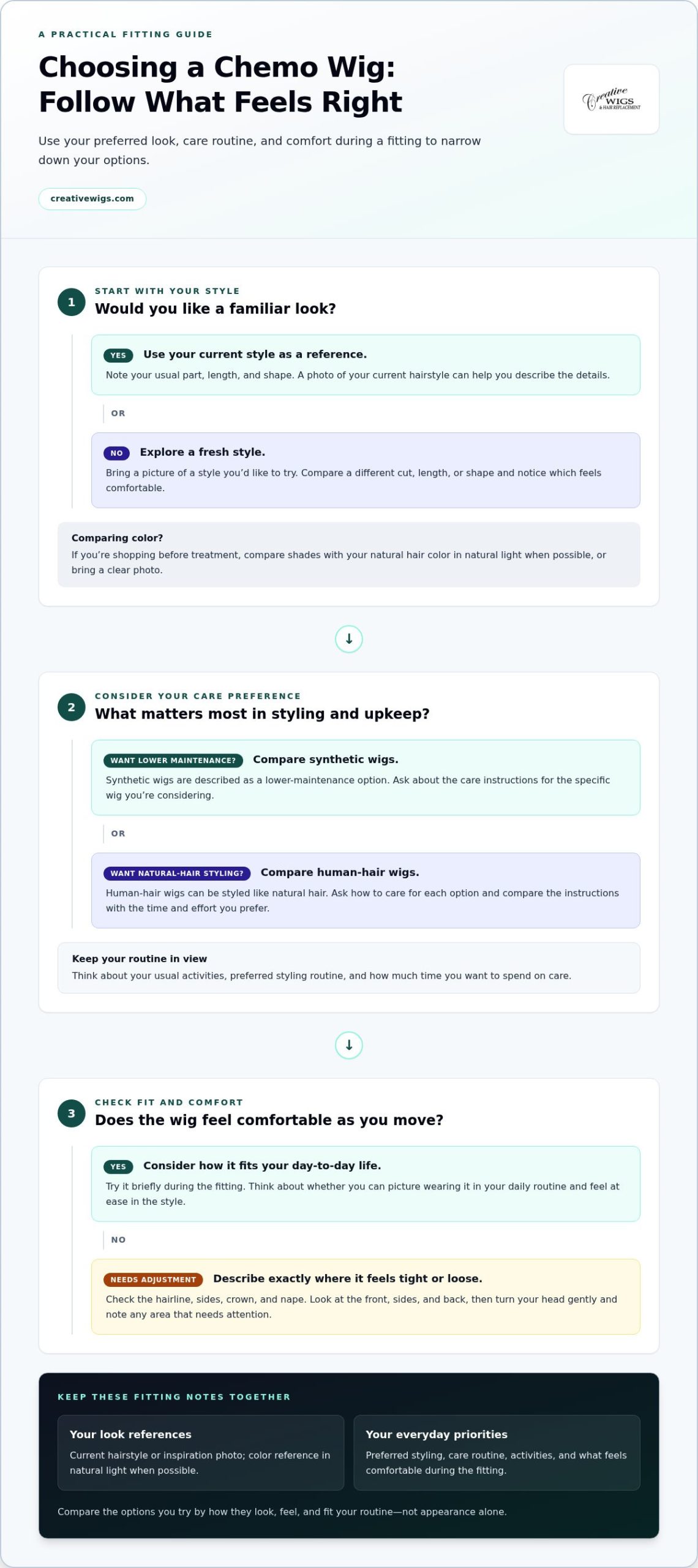
No single wig type is right for everyone during chemotherapy. Compare synthetic and human-hair options based on the look you want, your care preferences, and how each feels during a fitting.
- Start with the look you want. Decide whether you’d like a familiar appearance or a fresh style. Note your usual part, length, and shape before trying wigs. A photo of your current hairstyle can help you describe those details. You can also bring a picture of a style you’d like to try.
- Compare synthetic and human-hair options. Think about the appearance and care routine you prefer, then discuss both types during your fitting. Human-hair wigs can be styled like natural hair, while synthetic wigs are a lower-maintenance option. Ask how to care for each wig you’re considering, and compare the instructions with the time and effort you want to spend.
- Use your natural color as a reference. If you’re shopping before treatment, compare shades with your current hair color. Look at the color in natural light when possible, or bring a clear photo. A close match can feel familiar, while a different shade can help you try a new look. Choose what feels comfortable to you.
- Try more than one shape. Compare a style close to your usual haircut with another option that changes the length or silhouette. Notice how each frames your face and whether you feel at ease wearing it. A wig may look different on you than it does on display, so take a moment with each option.
- Let comfort guide the final choice. Wear each option briefly during the fitting and consider how it feels and looks. Think about whether you can picture wearing it in your daily routine. For help comparing chemotherapy wig styles, arrange a free consultation with Creative Wigs & Hair Replacement.
Comfort and secure wig fit
During each fitting, notice how the wig feels as well as how it looks. Check the hairline, sides, crown, and nape as you move your head.
- Start with a careful fit check. Place the wig as directed, then look at the front, sides, and back in a mirror. Notice whether the hairline sits naturally and the nape feels settled. If an area feels tight or loose, describe its exact location. Clear details help the fitter understand what needs attention.
- Test the fit with gentle movement. Turn your head from side to side, look down, then return to a relaxed position. Notice whether the wig shifts, lifts, or needs frequent repositioning. These movements can reveal fit concerns that aren’t obvious while sitting still. Share what you notice before deciding whether the fit feels secure enough.
- Pay attention to pressure points. During the fitting, notice any pinching or pressure around the temples, forehead, ears, or nape. A style may look appealing but feel uncomfortable in one spot. Tell the fitter where the pressure occurs and whether it changes when you move. Don’t ignore discomfort simply because the appearance seems right.
- Check the fit with your usual accessories. If you regularly wear glasses, bring them to the fitting. Put them on with the wig and notice whether the sides sit comfortably around your ears. You can also try a scarf or hat you commonly wear, if relevant. Using something from your daily routine makes the fit check more useful.
- Practice placing and removing the wig. Ask for a demonstration, then try the steps yourself while looking in a mirror. Notice where your hands need to go and whether the wig stays aligned as you position it. Practicing during the fitting can help you identify handling questions before wearing it at home.
- Describe your comfort clearly. Give specific observations rather than saying only that the wig feels wrong. For example, explain that the back shifts when you look down or that the area above one ear presses. Then try the fit again after adjustments. A calm, detailed conversation helps you compare comfort and stability.
- Consider how the fit feels over time. Wear the wig for a little while during the appointment and notice whether your first impressions change. Check the hairline again after walking or talking. For a chemo wig consultation in Salt Lake City, bring your fit questions and explain what you notice as you move. That keeps the fitting focused on practical needs.
Ordering and fitting a wig
Use the ordering process to carry your choice from the first try-on to a practical fit. Keep notes about the style, color, and adjustments you want.
- Write down the details of your preferred wig. Record its color, length, shape, and any features that stood out during your consultation. If you compared several options, note what felt different between them. You might prefer one wig’s color but another’s silhouette. Clear notes help you describe your choice accurately when placing an order.
- Review the selected option before ordering. Confirm the style and shade you chose, and repeat any preferences that matter to you. If a photo helped you decide, keep it handy as a visual reference. Take a moment to make sure the choice matches your notes, especially if two styles looked similar during the fitting.
- Ask how the fitting will work. Find out what to expect during the appointment, including whether you can try on the wig and discuss fit adjustments. Bring your written notes and questions about styling or care. Knowing the steps in advance can make it easier to focus on how the wig looks and feels.
- Try the wig on and check its placement. Follow the fitting instructions, then look at the hairline, sides, and nape in a mirror. Turn your head and look down to see whether it stays in place. Notice any spot that feels tight, loose, or uncomfortable. Specific observations help guide a useful fitting conversation.
- Practice the basic handling steps. Ask for guidance on putting the wig on, taking it off, and positioning it. Then try each step yourself. A mirror can help you see whether the front and sides sit where you expect. If a movement feels awkward, mention it before leaving the fitting.
- Keep care instructions with your order details. Put the wig’s care guidance beside your notes about its style and fit. If you have questions about cleaning or styling, ask during the fitting rather than relying on guesswork later. For example, note the recommended brushing approach and any styling instructions you receive.
- Plan a follow-up conversation if questions arise. Keep your fit notes and order details together so you can explain what you notice after wearing the wig. Creative Wigs & Hair Replacement offers wig fitting, styling, repair, and maintenance. Describe your concern when you contact a store to keep the conversation focused on your needs.
Can I get a prescription for a medical wig from my doctor?
Yes. A doctor can prescribe a medical wig for hair loss related to cancer treatment. Ask your care team how to document your needs, then organize the paperwork for the coverage route you plan to use.
- Bring up the wig during a medical appointment. Tell your doctor that chemotherapy or radiation may cause hair loss and that you’re considering a medical wig. Explain whether you’re preparing before treatment or responding to hair loss that has started. Those details help your doctor understand your request and discuss whether a prescription or supporting letter is appropriate.
- Ask what documentation your doctor can provide. A physician’s prescription is relevant to Tricare’s coverage of one wig per lifetime for hair loss due to cancer treatment. Ask how your medical need should be described in the paperwork. Explain that you need a wig because treatment-related hair loss is affecting you, and keep the prescription with your medical records.
- Match the documents to your coverage route. Insurance claims for a medical wig often involve a doctor’s prescription, the wig receipt, and a completed claim form. Ask your insurer which claim process applies to your plan, then keep each item together. Some state Medicaid programs may reimburse part of a hair prosthesis cost after chemotherapy or radiation when an oncologist prescribes it.
- Ask about medical savings account requirements. A medical wig may be paid for with an FSA or HSA when you have a medical diagnosis and a doctor’s letter of medical necessity. Ask your doctor about the letter, and keep it with the prescription and other records. Organized documents can make it easier to explain the wig’s medical purpose.
- Keep copies and record each next step. Store the prescription, medical necessity letter, receipt, and claim paperwork together. If you submit documents, note what you sent and when. A folder labeled “medical wig” can keep these records separate from unrelated medical paperwork. Creative Wigs & Hair Replacement offers a free consultation to help you explore wig options while organizing your documentation.
Creative Wigs & Hair Replacement: Designer Wigs
Creative Wigs & Hair Replacement can help you explore wig choices after you’ve considered style, fit, and care. Its designer wig selection includes options to compare, and Wig Maintenance and Styling can support you with care after you’ve chosen a look.
If you’re considering an alternative to a full wig, discuss Hairpieces and Toppers during a consultation. Men seeking hair replacement can explore Men’s Hair Replacement Systems; an appointment is required for men’s services. Bring your preferences and questions, such as how a style fits your routine, so the conversation can focus on what matters to you.
For a personal conversation about wig options and care, contact Creative Wigs & Hair Replacement or visit a store.
Take the Next Step at Your Own Pace
Choosing a wig can be part of preparing for a personal change, but you don’t have to settle every detail at once. Give yourself space to think about what would help you feel most like yourself. A short list of preferences can make a future conversation easier, whether you’re ready to choose or simply want to explore.
A chemo wig consultation in Salt Lake City gives you a chance to talk through your needs face to face. Bring your questions and any style ideas you’d like to discuss. Creative Wigs & Hair Replacement offers a free consultation in a private room, where you can focus on your main concerns and take the next step when you feel ready.
For a supportive conversation about your options, book a free consultation with Creative Wigs & Hair Replacement. You deserve to approach this decision in a way that feels comfortable, considered, and true to you.
Frequently Asked Questions
How much does it cost?
The cost depends on the wig’s materials, customization, and services involved. There isn’t one price that fits every choice. During a consultation, you can discuss the options you’re considering and how their features affect the cost. Bring priorities such as preferred hair type or styling needs to focus the conversation, and ask what’s included in your selected option.
Can I wear the wig on top of my natural hair?
Yes, you can try on a wig while you still have natural hair. How it sits can depend on your hair’s length, volume, and how it is arranged underneath. Longer hair, for example, may affect how smoothly the wig rests. Mention your current hairstyle during the fitting and try the wig with your hair arranged as you expect to wear it.
How do I pick a wig?
Start with the look and routine you want, then compare options during an in-person fitting. Creative Wigs & Hair Replacement carries designer wigs from Jon Renau, Belle Tress, Raquel Welch, Gabor, Rene of Paris, Tony of Beverly, Halo Couture, and Hairdo. Consider color, shape, and styling preferences together. If you’re unsure, describe what feels familiar or what you’d like to change, then compare options with that goal in mind.
What is the process?
The process begins with a free consultation about your needs and preferences. Discuss the look you want, review suitable options, and try on styles to see how they feel. Bring a photo of a hairstyle you like if it helps you explain your preferences. If you choose a custom wig, production takes a few weeks after the consultation. Keep any care or fit questions handy for your appointment.
Will I receive my wig the same day as my consultation?
A custom wig takes a few weeks to produce after the consultation, so it won’t be ready that day. For other wig choices, timing depends on the selected option and whether it’s available for fitting. If you have a date in mind, mention it while discussing your choices. That helps make timing part of the conversation without rushing your decision.
Where can I get a chemo wig consultation in Salt Lake City?
Creative Wigs & Hair Replacement offers personalized, in-person consultations in Salt Lake City, with private rooms available for appointments. Walk-ins are welcome for wig services; men’s services require an appointment. The business also serves South Jordan, Orem, St. George, Northern Utah, Southern Utah, and Washington County. Contact a store to arrange a free consultation about chemotherapy wig options and the fitting process.
What happens during a medical wig consultation?
A medical wig consultation is a chance to discuss your hair-loss needs and explore suitable options with personal guidance. Share how you’d like the wig to look and feel, then talk through choices that fit your preferences. If you have medical paperwork for an insurance claim, bring it along. You can also ask about maintenance and styling support for your selection.
How do I prepare for a chemo wig consultation?
Bring a photo of a hairstyle or color you like, along with questions you want answered. If you’re seeking insurance coverage, bring relevant paperwork, such as a prescription or medical necessity letter. A short note about your daily routine can guide the conversation, too. For example, mention whether you prefer a familiar look or want to try a different style.